The post Unlock Business Potential with Byte Technology’s Advanced Discounting Features appeared first on Byte Technology.
]]>When Should Discounts be Used in Smart Vending?
Timing is Everything:
Discounts can be an especially powerful tool when used to leverage specific time frames. . Here’s how:
- Off-Peak Hours: Encouraging customers to visit during off-peak hours can help to increase revenue during typically slower times. Offering discounts during these periods can keep the momentum going throughout the day.
- Seasonal Promotions: Align your discounts with seasons or festivals to create a buzz and attract more customers. For instance, summer discounts on cool beverages or winter discounts on hot soups can be a hit.
- Weekday Specials: To counteract slow weekdays, introduce special discounts to boost customer footfall.
- End of Week Specials: Relevant for those operators serving workplaces with 5-day workweeks, setting an end of week special can help minimize losses prior to a weekend.
Byte’s platform allows you to set recurring discounts by day of week or time of day. The kiosk automatically updates pricing based on the schedule you preset, allowing you to “set it and forget it”.
Data-Driven Decision Making:
Utilizing data can help in making informed decisions about when and how much to discount. Here are some data sources and types that can be instrumental:
- Sales Data: Analyzing historical sales data from the Byte Dashboard can help identify patterns and trends, assisting in pinpointing the best times for discounts.
- Time on Shelf Data: Unique to the Byte platform is the ability to see how long each individual product has been on the shelf. Is a specific lot of product about to expire? Set up a targeted discount to avoid taking that product cost as a loss. Download shelf life data from the Products page.
- Customer Feedback: Utilize feedback and reviews to understand customer preferences, which can guide the creation of discounts that are both attractive and relevant. Customers provide feedback directly through the emailed receipt, allowing you to quickly review what people love (and don’t love) under the Feedback section of the Byte Dashboard.
- Competitor Analysis: Keep an eye on competitors’ discount strategies to formulate offers that stand out in the market.
Helpful Data Points for Timing and Amount of Discount:
- Customer Segmentation: Analyze different customer segments and their buying behaviors to tailor discounts that resonate with specific groups. With Byte’s platform you have access to customer emails, giving you the ability to target different customer groups with unique coupons.
- Price Elasticity: Understanding the price elasticity of your products can help determine the optimal discount percentage that maximizes profits without sacrificing customer value. How much is that same sandwich or drink selling for at the local market? At a nearby cafe? Don’t forget that the close proximity and convenience of your Byte kiosk allows you to command a price premium.
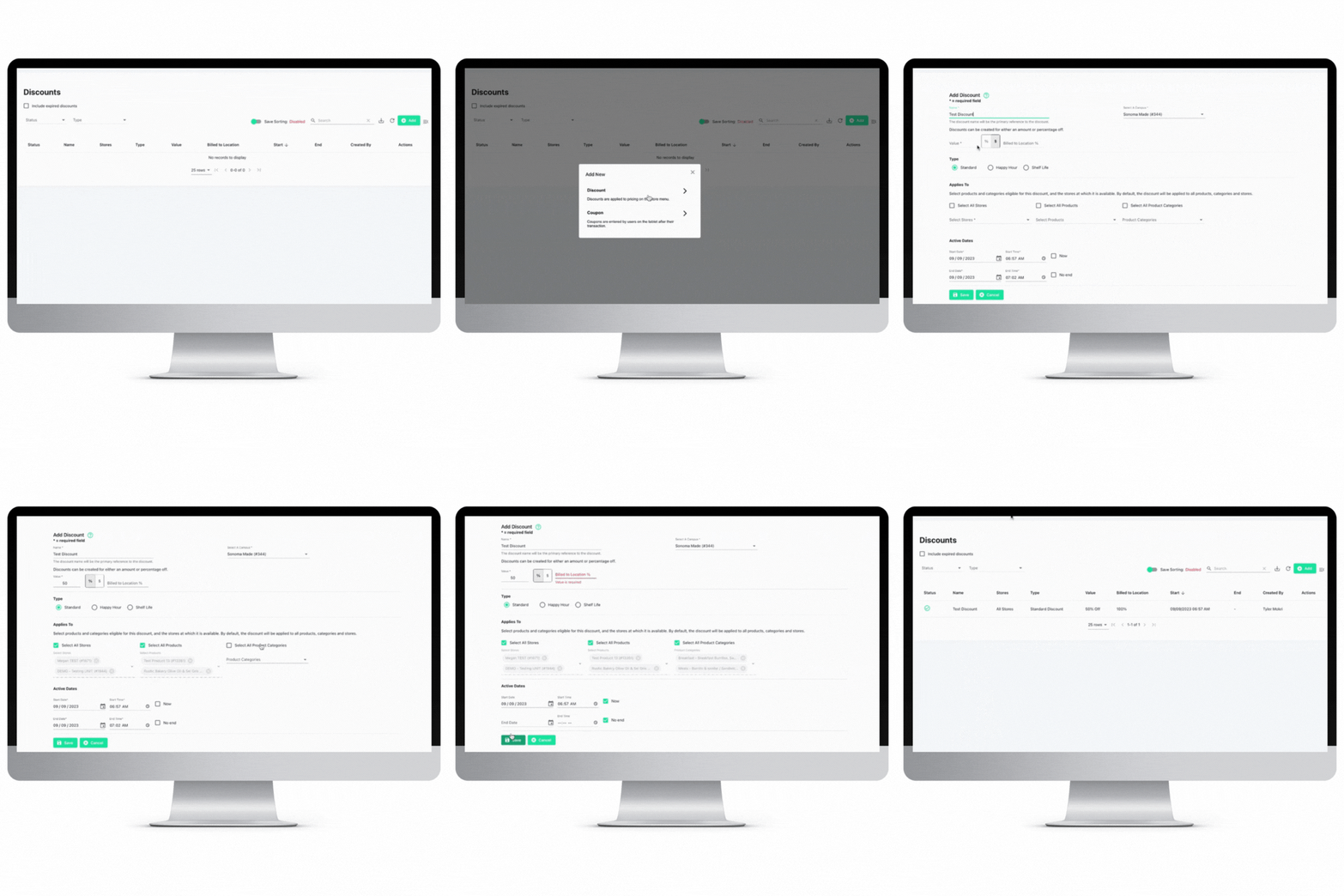
Discounts on the Byte Platform
Discover the different kinds of discounts that the Byte platform offers and how they can be customized to cater to various business needs:
- Standard Discount: Easily adapt to market trends with flexible standard discounts. You can set them as either a dollar amount or a percentage off, which can be applied variably across stores, products, or categories. Plus, schedule them to recur on particular days or hours to maximize impact.
- Happy Hour Discount: Engage customers during typically slow hours with a happy hour discount. This time-based incentive can be customized in terms of pricing and recurrence, fostering a regular customer base who look forward to these special hours.
- Shelf Life Discount: Mitigate losses due to spoilage with Byte’s unique Shelf Life Discount. This smart feature lets you apply timely discounts to products nearing their expiration date, promoting quicker sales and reducing waste. For example, a salad nearing its expiry can be marked down by 50%, encouraging customers to purchase it before it goes to waste.
- Coupons: Enhance customer loyalty and promote new locations using Byte’s coupon system. Offering either a dollar or percentage off, these coupons can be crafted to target specific stores, products, or categories, encouraging targeted sales growth. For example, the coupon code FIRSTTRY can be a fantastic way to boost engagement at a new location.
Use Discounts to Benefit Your Business
Discounting is not just a tool to clear slow-moving products but a strategy to augment your business revenues. Here’s how:
Avert Losses
Utilizing the Shelf Life Discount not only prevents losses from spoilage but also can contribute to revenue generation. Even breaking even by covering costs is a gain compared to a total loss.
Drive Additional Revenue
Explore the potential of Byte’s discount functionalities to catalyze business growth. Successful clients leverage subsidies to facilitate a win-win situation for both the business and the customers. Here’s how it works:
- Subsidies: These are an excellent way to foster a positive workplace environment, boost employee morale, and promote a healthier lifestyle. It can range from time-based subsidies, encouraging healthier food choices, to day-of-the-week specials to uplift employee spirits.
Form Strategic Partnerships
Collaborate with businesses to offer coupons and incentives to their employees, creating a nurturing ecosystem that encourages more usage of the Byte fridge, while offering perks to employees.
Conclusion
From minimizing spoilage to enhancing customer engagement and fostering a healthy workplace environment, Byte Technology’s advanced discounting capabilities offer numerous avenues to grow your business innovatively. Keen on exploring more? We are here to guide you through the endless possibilities.
Get in touch to dive deeper into the dynamic world of Byte’s discounting capabilities.
The post Unlock Business Potential with Byte Technology’s Advanced Discounting Features appeared first on Byte Technology.
]]>The post How Can Free Byte Academy Resources Help You Succeed with Fresh Food Vending? appeared first on Byte Technology.
]]>Because we believe in high-quality education as a key component of our customer support, we created Byte Academy as a resource to help you succeed with fresh food vending. This information is free and accessible for anyone, from startups to enterprise organizations.
What Kind of Content is in Byte Academy?
Byte Academy content includes high-quality educational content in two key areas:
- Sales: How to find prospects and close new locations. This section includes step-by-step information on how to acquire locations, a sample sales call script, a sample PowerPoint deck, and strategies for how to acquire the contact info for appropriate sales prospects.
- Account Management:
How to ensure new customers succeed and how to grow existing accounts. This section includes the procedures for onboarding new locations, how to upsell additional services, and what it takes to encourage new trials.
How Can This Content Help Your Business Succeed?
The foodservice industry can be extremely competitive, so it’s important to have clear strategies and procedures in place, both to attract new customers and to maximize the opportunities for leveraging your existing accounts.
Thus, with Byte Academy, you have access to the information and resources that can help your business grow. We hope that you take advantage of everything that Byte Academy has to offer. Please let us know if there’s anything else we can do to help.
The post How Can Free Byte Academy Resources Help You Succeed with Fresh Food Vending? appeared first on Byte Technology.
]]>The post Publix Super Markets Innovates with Byte’s Fresh Food Vending To Reach New Channels appeared first on Byte Technology.
]]>Now, Publix is expanding it’s fresh food distribution and has chosen Byte Technology’s innovative smart refrigerators in order to create Publix-branded fresh food vending machines at a large variety of locations.
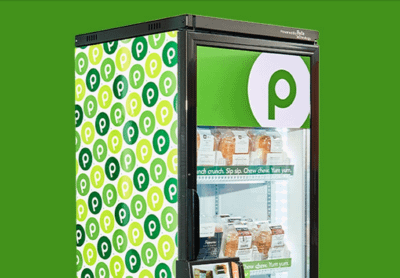
These vending machines are located in various health centers, schools and companies around Florida, such as Flagler Hospital, Halifax Health, the University of Central Florida, Florida Southern, Giant Recreation World, and other locations, with more on the way.
Customers who already love the Publix brand are now able to purchase delicious market-style sandwiches, sliders, wraps, yogurt parfaits, hummus, fruit cups, soup, Publix brand tea and lemonade, and other fresh food items from these Publix vending machines that are replenished frequently.
As they said in a social media post, “This is just another way Publix Technology works with vendors and others to bring healthy and delicious food solutions to our customers.”
The post Publix Super Markets Innovates with Byte’s Fresh Food Vending To Reach New Channels appeared first on Byte Technology.
]]>The post Webinar: Selling the Service appeared first on Byte Technology.
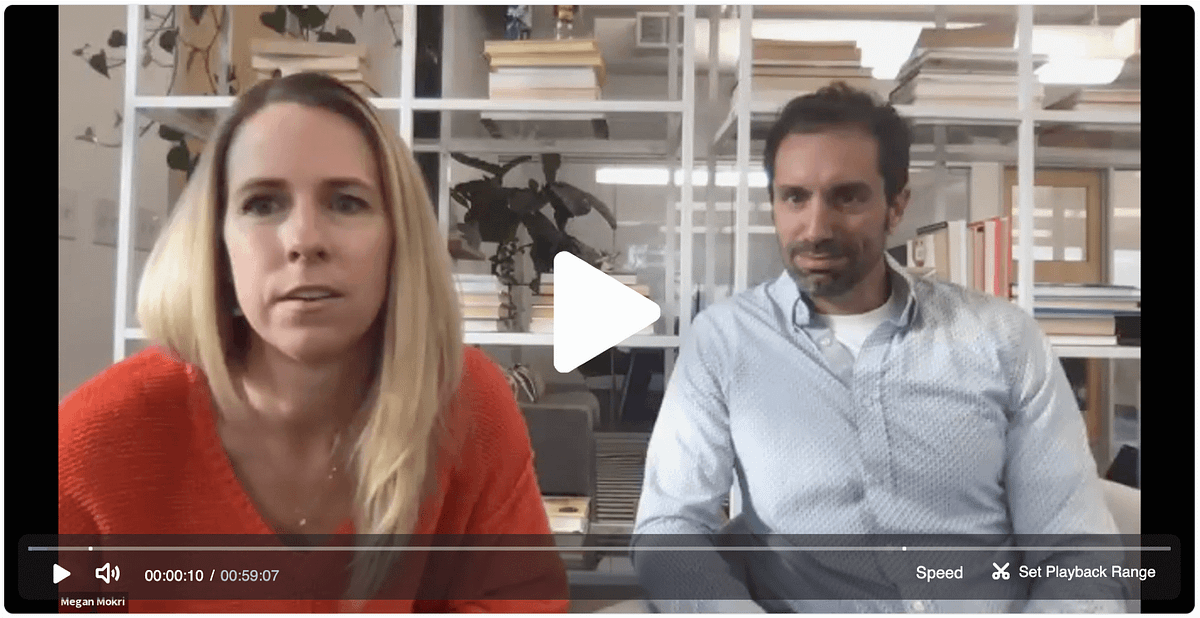
]]>Hosted by Megan Mokri, Founder and CEO at Byte Technology
Featuring guest Lee Mokri, Founder and VP Sales at Byte Technology
The post Webinar: Selling the Service appeared first on Byte Technology.
]]>The post 5 Lessons Learned from Deploying 500+ Unattended Retail Stores appeared first on Byte Technology.
]]>In 800 BC, before the likes of Costco warehouses or shopping malls, the first retail markets opened their doors in Ancient Greece. Merchants gathered in the city center of Agora to sell directly to their customers, who were gathered to socialize and shop. Throw in a Starbucks and it sounds like the ancient version of the Grove! Not much has changed since then, except retailers today have access to waaay better technology to improve the customer experience.
We know a few things about that, which is why we’re pulling back the veil to impart the wisdom learned from operating 500+ stores generating nearly $10M in revenue. We’re eager to share how to sell our service, optimize resources like delivery, and avoid obstacles while scaling Byte’s unattended retail platform.
1. Fresh Food is a Must-Have for Workplaces
Until Byte’s arrival, companies had very few decent food options. We noticed that 99% of companies weren’t offering fresh food to their employees because it was too expensive. This was a significant pain point, yet a tremendous opportunity. It’s no surprise that well-fed employees enable their teams to be more productive, happier and healthier. To get our first Byte stores deployed in 2016, we called local offices and offered to set up a Byte store at no cost to them. We witnessed immediate traction because offices were clamoring for fresh food on-site. Within several weeks we had 20 locations generating revenue around the Bay Area.
This put Byte Foods’ value proposition into perspective.
The demand for fresh food in the office was enormous and the cost could be passed along to the customer. We saw companies like Facebook and Google spending millions of dollars a month to provide quality food for their employees, so they were clearly seeing a solid ROI. These insights influenced our pricing strategy to begin charging a monthly ‘subscription’ fee for our completely turnkey service.
Growth accelerated month-over-month, and we saw companies for whom this was never an option begin offering fresh meals at work. We were thrilled to have traction in the usual places of technology, finance, services industries, but also in places you wouldn’t expect like manufacturing, government and nonprofits.
Takeaway: Workplaces understand the value and impact of having fresh food on-site—and they’re willing to pay for it.
—–
2. Optimize Delivery Frequency and Time
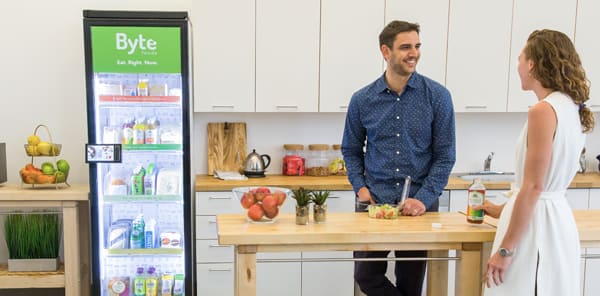
We were overly cautious out of the gate when it came to food spoilage, making deliveries and daily product inspecting. Interestingly, our food didn’t require that much attention. Our average shelf life hovered around 3-7 days before losing quality and freshness. That meant we could deliver as little as twice a week without compromising on the customer experience. On average, we now make three deliveries per week to our Byte Food stores – some shops receive more frequent deliveries due to sell-through.
In the early days, all deliveries happened in the morning because everyone wanted a freshly stocked store to start the day. Naturally, this created huge peaks on our delivery routes, which hurt efficiency and pushed deliveries back later and later into the day. We solved the issue by moving the majority of our deliveries to after-hours, smoothing out the delivery peaks and eliminating issues around traffic or our drivers being a distraction for the employees. It also removed any driver hiring bottlenecks, where we could make more deliveries with fewer drivers.
Takeaway: Delivering food after-hours and at a frequency matched to sell through at a given location has proven to be the most efficient and cost-effective way to restock.
—-
3. Traditional and Next-Gen Vending Machines Just Don’t Cut It
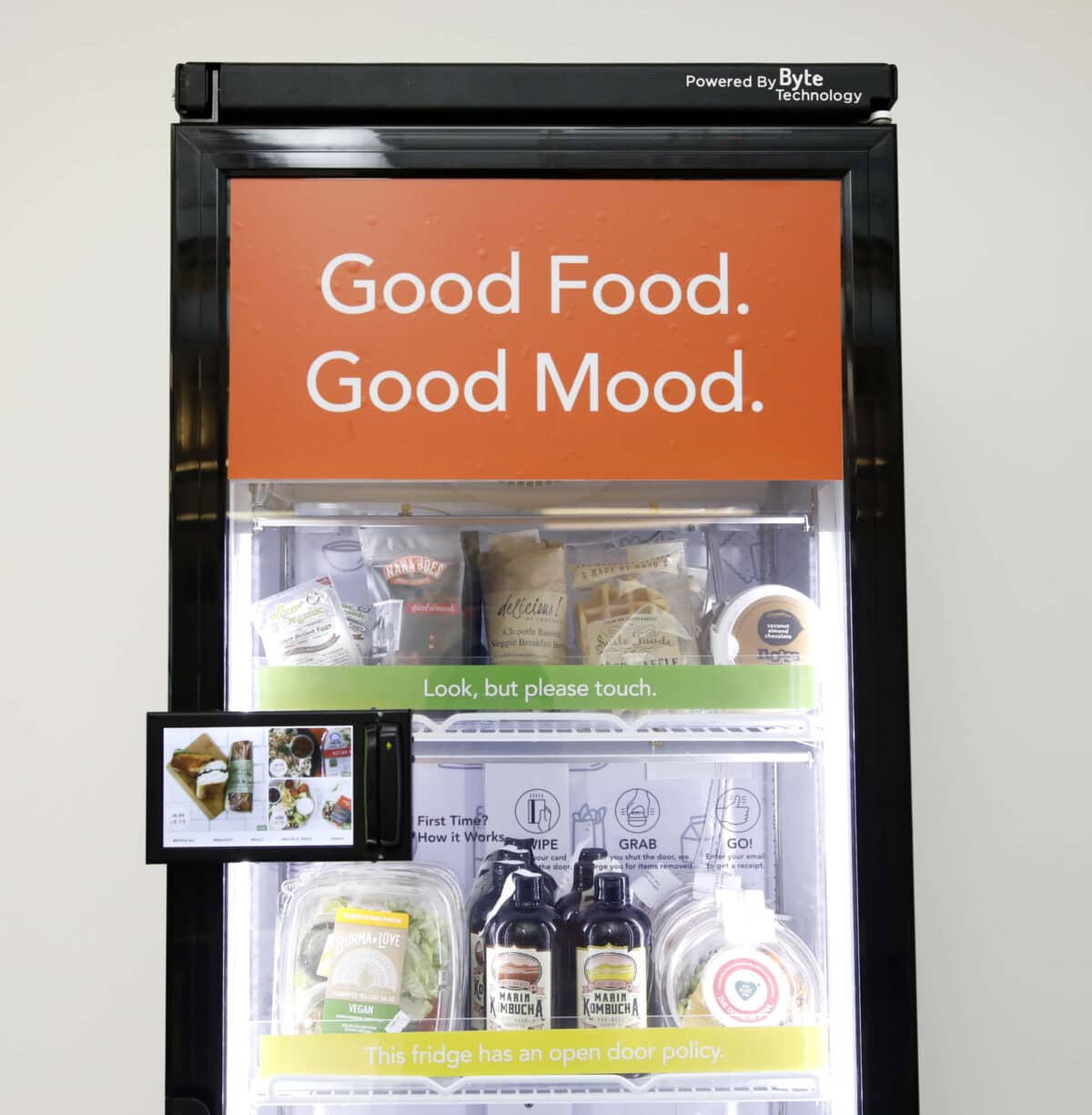
Byte sources its food from third-party suppliers – that’s why we’re like a mini Whole Foods in an office. Between variously sized drinks, meal packages, and snacks, it was crucial that our store wasn’t restricted by pre-sized slots. There was no way even newer, more versatile vending machines could handle the diverse range of products we were offering.
Ergo we knew our stores must be more than a redesigned vending machine. That’s why we included different configurations with expandable and retractable shelving slots for any size product. Our technology platform is capable of allowing a variety of products in a single row, so you no longer have to stock a single SKU “all the way back.” Since it’s connected to the internet, the operator can see real-time inventory across an entire fleet of fridges, which includes product expiration dates, change product pricing and much more.
Takeaway: Your technology partner can make or break the success of your business. A less flexible, traditional vending machine never could have secured our place in 500+ stores
—–
4. Pricing Should Be Highly Customizable
Some customers wanted the ability to subsidize their food with varying discounts or even give it away. We had requests for employee allowances, incentive discounts, and company sponsored happy hours. Clients even wanted to subsidize food just for their graveyard shift employees.
It’s clear: providing flexible per-location pricing models helped us land dozens of customers. Our food wasn’t simply an amenity — it was a tool for offices to drive employee satisfaction and build culture.
Takeaway: Giving businesses flexibility over food pricing reframed our stores as an opportunity to create value for employees, rather than just another food option.
—-
5. Precise Food & Sales Data Is Non-Negotiable
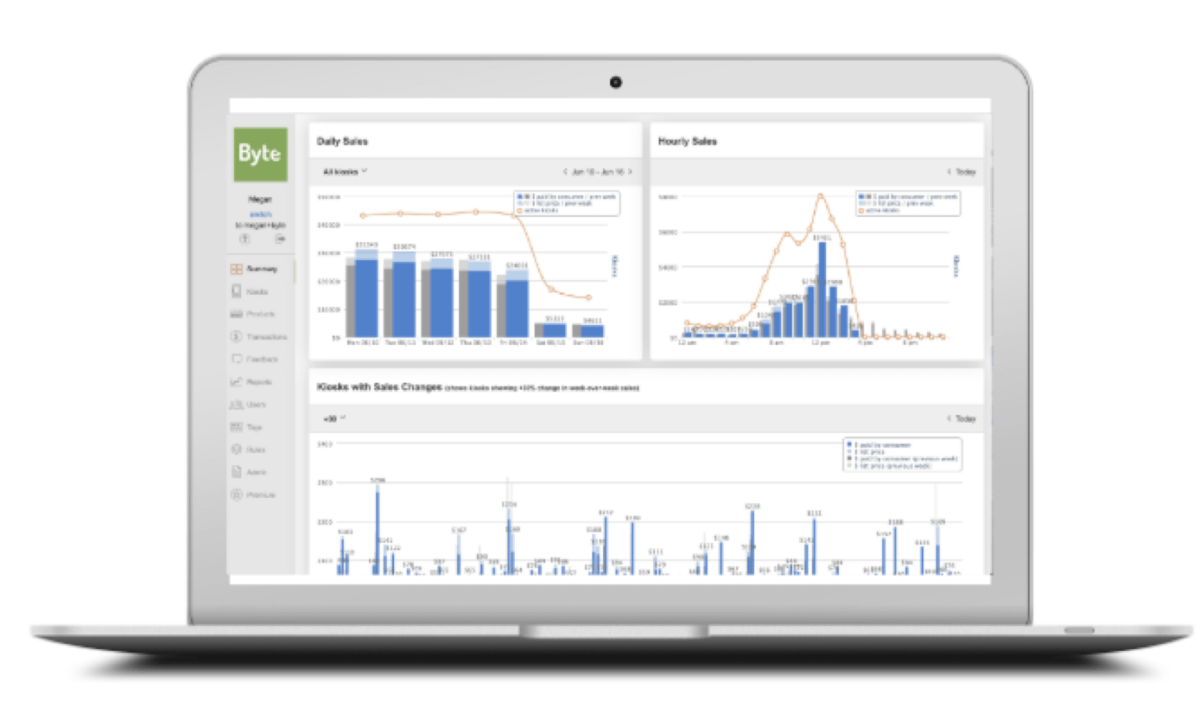
We knew each location would want their own unique food mix, we just avoided too much customization. Indian cuisine, for example, sold tremendously well in 20% of our stores, but flopped in 80%. Shutting off stocking Indian cuisine at those locations drastically cut our waste — which improved our overall margins — all thanks to granular data provided by Byte Technology’s platform.
This data enabled us to accomplish things that would have otherwise been impossible:
- Learning how to identify per-location preferences. Some places saw strong demand for breakfast sandwiches, while others frequently had employees stay late for dinner. Anticipating these trends and adjusting product selection has been a boon for Byte.
- Catching product fatigue early. Variety is the spice of life. We noticed when office enthusiasm for certain items waned or when sales data dipped, which made it easy to swap out food with something new and seasonal to get consumers excited again.
- Accurately tracking food spoilage. With each delivery, the Byte Technology platform automatically records products that did not sell and removes them from the store. In addition, we can see how long each product has sat on the shelf and proactively discount it. We’ve built a more profitable business while offering our customers a great user experience.
- Created predictive sales algorithms for optimized purchasing. These models tracked historical sales and spoilage data, current shelf life and expected demand to help inform ordering, minimize spoilage and inform stocking across every store.
Managing inventory and demand can’t be done in an Excel spreadsheet when you have hundreds of stores in the field. Having real time data and demand planning from the Byte Technology platform was key.
Takeaway: The key to reducing food waste, purchasing the right products on a per-location basis, and maintaining control of back-end operations comes down to accurate, actionable data.
—
People aren’t going to stop eating anytime soon, so we designed the smartest retail system to get fresh food into micro-locations. We know unattended retail is the right solution for brands to expand beyond traditional brick-and-mortar stores. While demand for Byte technology has been proven beyond a shadow of a doubt, retail is a tough nut to crack (been there!) regardless.
That’s why we’ve shared our best tips and tweaks to alleviate early growing pains with our partners. Byte’s clever technology makes operational logistics like forecasting and inventory management a breeze. The rich and precise data collected offers powerful insights and customizations to keep our partners ahead of changing consumer tastes and trends in the ever-evolving retail space. When it comes to retail, one size rarely fits all. Thanks to our delicious data, customers and Byte partners get exactly what they want.
Let’s extend the reach of your products into local businesses
The post 5 Lessons Learned from Deploying 500+ Unattended Retail Stores appeared first on Byte Technology.
]]>The post An Introduction to Byte Technology: Our Transition from Service Business to Platform Business appeared first on Byte Technology.
]]>Along the way, we learned in intimate detail what it takes to grow and operate a business on the shoulders of highly perishable product being sold in a variety of micro-locations – workplaces, hospitals, universities, airports, and more. We’ve folded these learnings into a platform that, on a daily basis, intelligently allocates inventory across hundreds of storefronts and allows consumers to purchase quality, fresh food 24/7.
As 2019 starts to unfold, we shift our focus in a big way: to open the Byte Technology platform to retailers of any size, enabling them to power their own unattended retail experience using Byte’s technology. In practical terms, this means customers – food retailers, food service operators, vending companies – purchase smart fridges from Byte Technology and use our software platform to manage the service, restocking, and optimization of those storefronts.
Why the shift?
Our mission at Byte is to change the way people eat by providing effortless access to fresh food. As we looked at the organic growth happening with our platform business last year, we saw very clearly how we could deliver most meaningfully on that mission by opening our platform to the many retailers looking for a better way to sell their fresh food to consumers.
What types of customers does Byte Technology work with?
Byte Technology works with customers across a range of industries, including food service, vending, brick and mortar retailers, ecommerce retailers (ex: food delivery, meal subscription services), and hospitality. These customers leverage the Byte platform in a few ways:
- To extend the hours of a cafeteria.
- To extend the reach of fresh food across a large university or corporate campus.
- To replace the manned cash register and provide 24/7 service at a retail location.
- To provide a paid-for fresh food service to workplaces.
In what kind of locations are these fridges being placed?
You can find Byte-powered fridges in a range of different locations including workplaces of all sizes, universities, apartment buildings, hospitals, airports, hotels, gyms, and retail storefronts – anywhere consumers are looking for a quick, convenient bite to eat.
Why are customers choosing the Byte Technology platform?
In a previous post, I wrote about several macro trends driving the adoption of unattended retail in the grab ‘n go food space. Trends include growing consumer demand for fresh, convenient food; the growing role of food at work; labor costs and shortages in the retail and food service space; and Amazon Go entering the space. In addition to these trends, customers choose Byte as their platform of choice for a few reasons:
- Seamless shopping experience – Shopping at a Byte-powered storefront very closely mimics a normal retail shopping experience. After swiping a credit card, the customer opens the door and is greeted by open shelving and product they can pick up and interact with – just as they would at a normal market. The beauty of Byte’s technology is the fridge knows what was removed by the consumer and automatically charges them – no honor system or self checkout here!
- Ability to own the consumer – With the increasing consumer adoption of on-demand delivery services like UberEats, Doordash, Instacart and others, retailers are now once removed from their consumer. The Byte Technology platform allows them to recapture this direct link to the consumer, and deliver – at higher margins – even more convenience than delivery can offer.
- Data – Byte’s storefronts are smart. They not only allow consumers to transact in an automated fashion, they also provide a real time view of purchase data, restock data, inventories, and product feedback. This information, paired with consumer insights and real time pricing control, create a rich environment in which retailers can deliver a customized consumer experience that also delivers financially.
- Flexible merchandising format – Byte’s open shelving means that nearly any form factor can be accommodated in a fridge. Salads, sandwiches, burritos, wraps, drinks, snacks and more – Byte’s shelving can be reconfigured to accommodate different packaging and product sizes.
As the food delivery and food retail space continues to shift to meet changing consumer demands, Byte Technology aims to empower retailers with a new direct-to-consumer distribution channel through our small footprint unattended storefronts. If you’re interested in learning more, we’d love to talk to you – email me directly at megan@bytetechnology.co to schedule a call.
The post An Introduction to Byte Technology: Our Transition from Service Business to Platform Business appeared first on Byte Technology.
]]>The post Advanced Discounting on the Byte Platform appeared first on Byte Technology.
]]>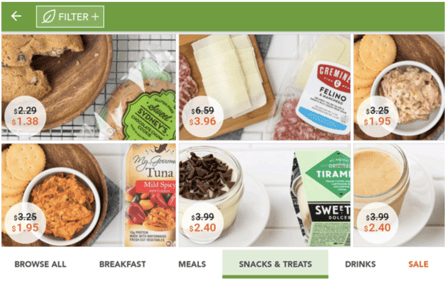
With discounts and coupons you can:
- Allow locations to subsidize food
- Enable locations to purchase coupons as rewards for employees
- Promote the service at a new location
- Encourage lapsed customers to purchase again
- Minimize spoilage
The list goes on and is only limited by your creativity.
In this post, I’ll dive into the two main areas of discounting. First, we’ll look at what discount functionality can be leveraged through the Byte Technology platform. Second, we’ll look at how you can package this feature up to make your business more money or save you money.
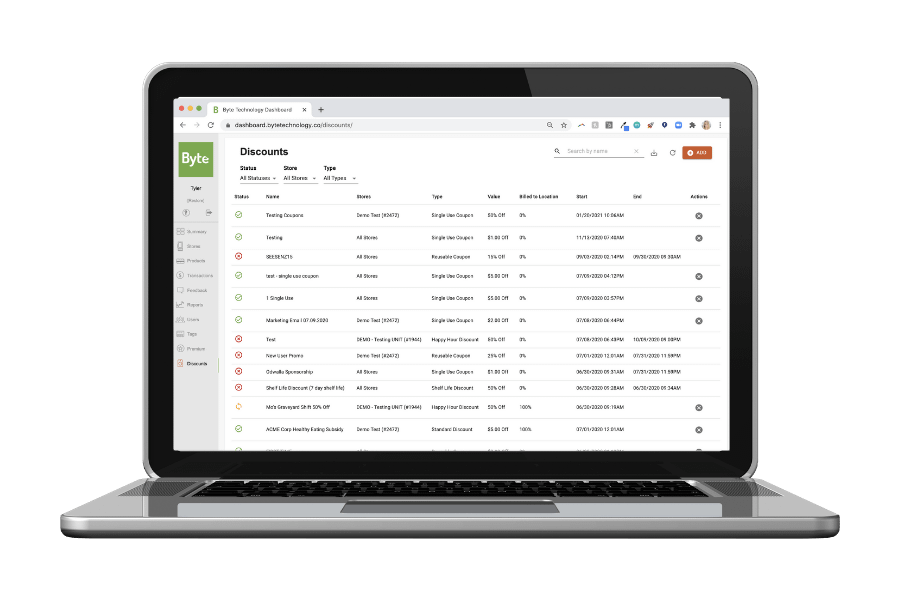
Discounts on the Byte Platform
There are several types of discounts on the Byte platform:
Standard Discount: A standard discount can be either a dollar or percent off applied to different combinations of stores, products, or product categories and can recur on certain days or hours of the day.
Happy Hour Discount: A happy hour discount is a time-based discount. Similar to a standard discount, it can be either dollar or percent off and apply to different combinations of stores, products, or product categories. A happy hour discount can also be set up to be recurring.
Shelf Life Discount: This type of discount is unique to the Byte platform and is quite powerful for managing spoilage. The shelf life discount applies either a dollar or percent off discount to products that meet set requirements on the number of shelf life days and days left to expiration. For instance, let’s consider a salad has a shelf life of 5 days and has been in the Byte fridge for 4 days. I can set up a shelf life discount to apply 50% off to any salad that is expected to expire in one day or less. This helps me incentivize my customers to buy the salad, instead of having to remove it as spoilage.
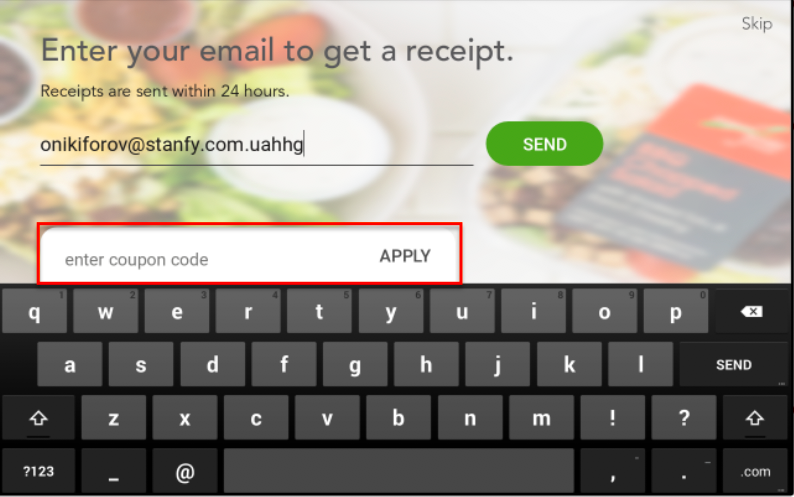
Coupons: After a transaction, the Byte fridge menu displays a screen where the customer can input their email for a receipt and input a coupon code. Coupons can be set up to be either dollar or percent off, and can be set up in a way that they only apply to certain stores, products, or product categories. Coupons can be set to be one time use, or multi use. For instance, you can set up a multi-use coupon FIRSTTRY to promote and incentivize use at a new location.
For our clients, there is an extensive amount of additional information in our Help Desk. Note you’ll need to be logged in to access this information.
Using Discounts to Benefit Your Business
The most obvious use case for discounting is to clear through products that are slow to sell. We reviewed one example above using the Shelf Life Discount to do just that. Why discount product that is about to expire? If a salad retails at $10.00 and costs you $5.00, then a spoiled salad costs your business $5.00 and brings in no revenue. Using the Shelf Life Discount gives you the opportunity to bring in revenue against a product that was otherwise about to spoil – even if you’re only able to cover your costs, that’s a benefit to your business.
But what if you could use this incredible functionality to drive additional revenue for your business?
Byte’s most successful clients do this well. When selling into a location, a great question to always ask is if the location is interested in subsidizing any of the food being sold. What is a subsidy? It is when the location pays a portion of the price of the food in order to reduce the price for their employees. For instance, if a workplace chooses subsidize the food by 40% then the price of all items is reduced by 40% for the employees, and the business will be billed for that 40% at the end of the month based on what is purchased.
Why would a workplace want to subsidize food? For a myriad of reasons – to promote wellness of their team, to support a positive culture, to boost employee productivity.
We’ve seen a wide range of subsidies be sponsored by locations, including:
- Time of Day: A manufacturing plant chose to subsidize all food by 30% between the hours of 7p-3a in order to support the graveyard shift.
- Day of Week: A workplace in the retail industry sponsors a 50% off subsidy on Fridays as a way to boost employee morale and reward employees.
- Better for You Options: A technology company subsidizes all salads by 50% to encourage employees to make healthier eating choices, thereby promoting wellness at work.
Another way to increase sales to the locations you serve is to offer coupons for sale. Locations use coupons to hand out to new employees and as a reward for star performers. The benefit to you is that you’re able to sell a bundle of coupons, collect payment up front, and ultimately encourage even more use of your Byte fridge.
This article touches on just a handful of ways discounts and coupons can be used to boost your business. If you’re interested in learning more, we’d love to talk.
The post Advanced Discounting on the Byte Platform appeared first on Byte Technology.
]]>The post Macro Food Trends Driving Adoption of Unattended Retail appeared first on Byte Technology.
]]>What Byte delivers is much different. Byte’s platform enables any retailer to deliver an experience similar to shopping at a store, but 100% unattended. A glass front merchandiser fridge has open shelving and a flexible format to sell freshly prepared salads, sandwiches, meals, and more. With the swipe of a credit card or app, consumers access the fridge and grab anything they wish. Once the door is closed, Byte’s technology knows what was removed and charges the customer accordingly.
Byte is witnessing first-hand several macro trends driving retailers, food service companies, vending operators and others to test new channels and adopt new technology — like Byte — to meet shifting consumer demand.
- Unprecedented demand for convenient access to fresh, grab ‘n go food.
Recent SPINS data shows that “fresh” is the number one purchase driver for Millennials and Gen Z. In addition, 55% of Millennials say convenience is a top driver when buying food. These two drivers require retailers to adopt an omni-channel approach, driving awareness and sales online, in-store and at-hand. At-hand represents an entirely new distribution channel that leverages Byte’s unattended retail platform to sell fresh food in non-traditional retail locations, including the workplace, hospitals and universities. - Growing role of food at work.
Offering fresh meals at work is no longer a Bay Area phenomenon; it’s rapidly becoming table stakes to recruit and retain top talent. Fresh, healthy food impacts employee wellness and culture, but for most companies it’s not part of the company culture or budget. Catering is expensive and can cost businesses as much as $15 per employee, per meal, per day. That’s where Byte thrives — our platform allows a company to offer food onsite without having to purchase all of that food. We’re seeing partners in LA, Dallas, Nashville, Philadelphia, St. Louis and other major cities leverage Byte’s platform to create a new revenue channel, extend the reach of their products into the workplace, and support employers looking for an alternative to packaged snacks or expensive catering. - Labor costs and shortages.
Byte services several hundred fridges in the Bay Area and experiences first hand the pain of labor shortage for blue collar workers. Forbes recently highlighted the challenges businesses are facing and discusses how this will cause wage increases and the need for companies to hire more and look elsewhere. This is one of the drivers of increased interest in unattended retail. - Amazon Go entering the space.
Last year Amazon Go made a splash with the opening of their first, cashierless convenience stores. Shortly after launch day in Seattle, they announced plans to open 3000 storefronts by 2021. Under less fanfare, they rather quietly announced that they had started testing smaller footprint versions designed for commercial building lobbies. While grocers and retailers are already battling to compete with Amazon online and in-store, Amazon Go entering the workplace now has the attention of those in the food service and vending space.
The trends above will play a major role in the expansion of unattended retail in the food space, and Byte is well positioned to be the platform of choice.
To learn more about how the Byte platform can help transform your business, schedule a call with our sales team today:

The post Macro Food Trends Driving Adoption of Unattended Retail appeared first on Byte Technology.
]]>The post Webinar: Operating for Growth appeared first on Byte Technology.
]]>Hosted by:
Megan Mokri, Founder and CEO at Byte Technology
Lee Mokri, Founder and VP Sales at Byte Technology
The post Webinar: Operating for Growth appeared first on Byte Technology.
]]>The post In the Race to Deliver Convenience, Proximity is Power appeared first on Byte Technology.
]]>In the last five years, we’ve seen the rise of billion dollar industries around grocery and meal delivery to the home. These new models haven’t come without their own set of challenges. Meal kit companies face high customer acquisition costs and churn. Many vertically integrated meal delivery companies – Munchery, Maple, Sprig, Spoonrocket – shuttered after failing to make their unit economics work. And most recently, food retailers are starting to feel the squeeze on margins as on-demand delivery services like Uber Eats and Doordash take a growing number of their orders and command 15-30% commission.

This squeeze from on demand delivery partners is causing a new wave of innovation. One new segment, ghost kitchens, aims to decrease the cost of fulfilling orders through on-demand delivery partners. Ghost kitchens are essentially restaurants but without front of house space or staff. They enable the operator to build a brand through delivery platforms, are strategically located close to areas of high order demand, and have lower costs when compared to a traditional restaurant. The folks at Fifth Wall have a great breakdown on ghost kitchens.
Another model we’re seeing thrive within the quick serve restaurant space is a hub and spoke model. Food is produced at a commissary hub, then pushed out to brick and mortar storefront spokes. Players like Snap Kitchen, Everytable, and Proper Food have grown this model nicely. Producing at a commissary allows for scalable, efficient and consistent food production. Stores take a smaller footprint, are less costly to open and run, and deliver fast and easy service to the consumer.
Then there’s Sweetgreen’s Outpost offering that launched last fall. Outpost is a dedicated drop-off point for group deliveries housed within corporate clients. Customers order ahead of time, then pick up their food at an Outpost on the honor system. This enables Sweetgreen to offer free corporate delivery and relieve the need for a third party delivery service like Doordash. Early results have been so positive that Sweetgreen states it’ll roll out 1,000 new Outposts by the end of 2019.
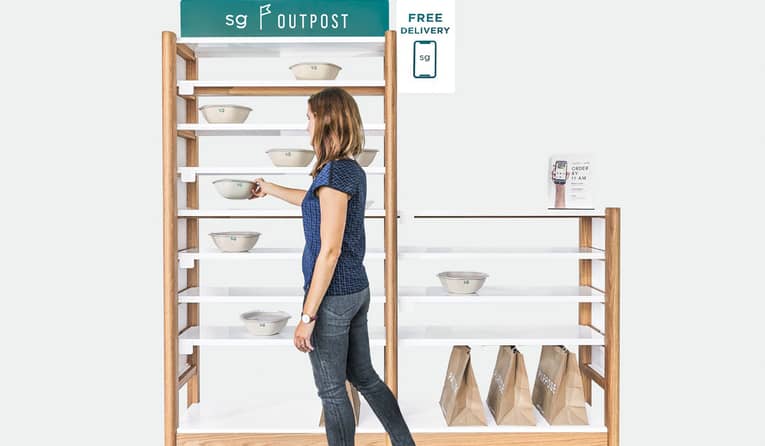
At Byte Technology, we believe proximity is power. What if you could embed your store where customers already live, work, and play? That’s precisely what Byte’s platform allows food retailers to do. Whether in a workplace, at a hospital, in an apartment building, or at a gym, Byte Technology-powered stores offer consumers what no other distribution method can offer – immediacy at the point hunger strikes.
While consumers get the ultimate benefit of immediate access to fresh food, food retailers benefit from:
- A small footprint storefront that is physically embedded where consumers already spend time, thereby keeping their brand top of mind (what we call “line-of-sight marketing”),
- Real time consumer insights such as cross-purchase and substitution, consideration time, product ratings and feedback, price sensitivity and responses to promotions and messaging.
- A profitable and labor efficient distribution channel whereby a large number of orders are replenished with each delivery, on a set and recurring schedule.
- The ability to adjust pricing in real time, thereby minimizing the cost of waste on their business.
Byte calls this type of right-next-to-the-consumer distribution channel “at hand”, and we’ve seen its power first hand. The average customer shops at a Byte-powered store nearly five times a month, and even at stores that have been in place three years we see incredibly high customer retention rates. Moreover, Byte-powered stores deliver incredible value to the commercial spaces they occupy. The power of this distribution model is why clients like Everytable have incorporated Byte stores into their overall growth strategy.
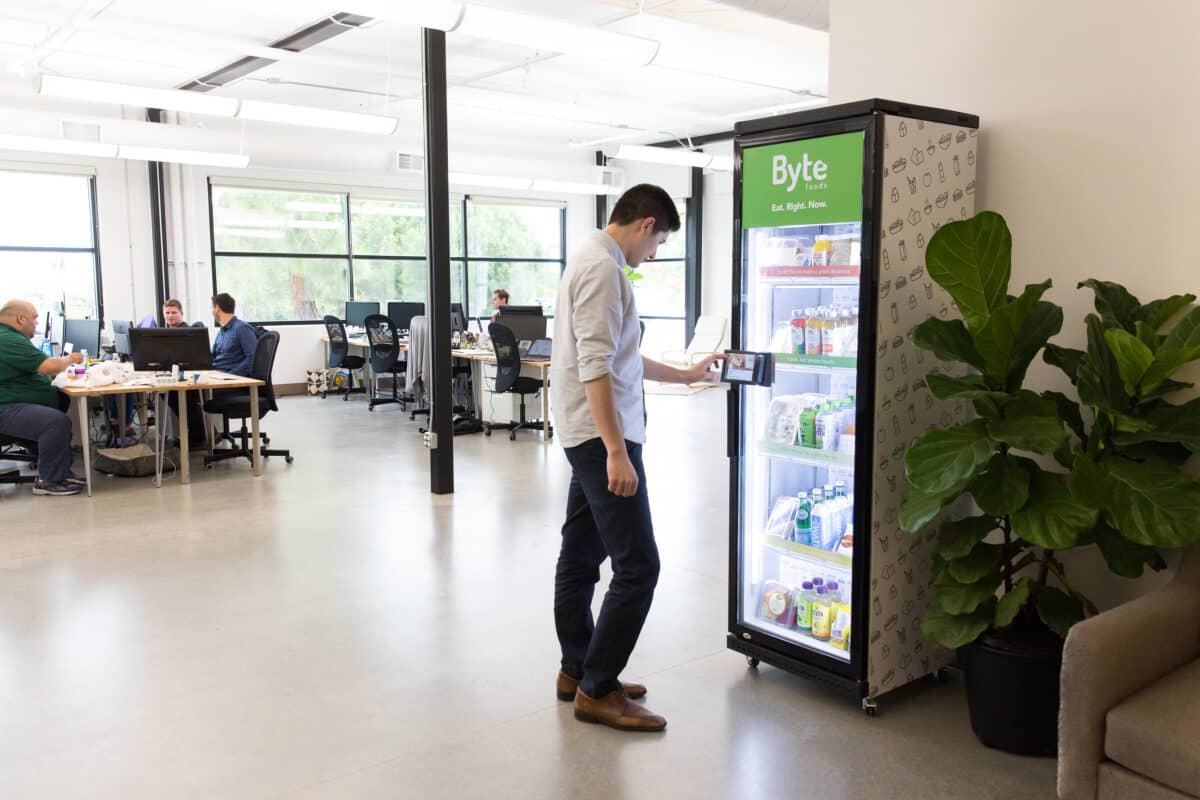
With food retailers feeling the margin squeeze, we’ll continue to see new models that aim to offer quality food at an affordable price. At Byte Technology, we focus on proximity to the consumer. And we believe that having this proximity is incredibly powerful in offering food retailers a profitable distribution model and making the most convenient choice, a fresh and quality choice.
The post In the Race to Deliver Convenience, Proximity is Power appeared first on Byte Technology.
]]>The post Adding to your product offerings appeared first on Byte Technology.
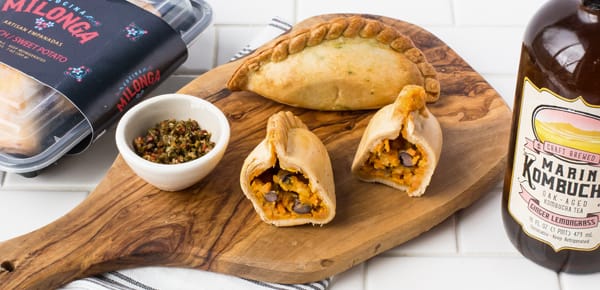
]]>Most food operators have their set menu offerings based on kitchen and production limitations. For a Byte store, there are other ways to source and sell additional products. An easy way to expand your offering and boost sales is to buy food from wholesalers and sell it directly through your Byte fridge.
Stores like Costco, Sam’s Club, and local catering companies* are ideal sources for delicious grab ‘n go products.
*Click HERE to find a catering company in your area.
Check out our latest video on how to shop at a Costco to add to your product mix:
Byte Sized Friday – Highlight Our Trip to Costco Surprised Us
The post Adding to your product offerings appeared first on Byte Technology.
]]>