The post 1. Onboarding a new location appeared first on Byte Technology.
]]>Key contacts
It’s a good idea to record the key contacts at the company, including their names, email, and phone numbers:
- Main contact: the person you’ll primarily interact with
- Technical contact: if you’re doing a more advanced hardline connection, for instance, the person you should talk to regarding on-site technical issues
- Accounting contact: the contact information to use when sending an invoice for setup fees, subscriptions, subsidies, or coupons
Delivery Information
You’ll be making two different types of deliveries – the initial delivery of the store, then ongoing deliveries of your fantastic food. For ongoing food deliveries, make sure you confirm and/or set expectations around the following details:
- Where the store will be located
- What amenities the location already provides, such as utensils and microwave
- What hours you’ll be able to make deliveries
- If you’ll be able to get access for after hours deliveries
Food Mix
Now the most important part! What kind of fantastic food is appropriate for the location. Ask a few questions to understand if the location has any atypical food preferences or needs, such as:
- Do they currently offer any other free food or drinks?
- Are there any restrictions you should be aware of (for example, are glass bottles ok on site)?
Asking a few quick questions will help start you off on the right foot with a new location.
The post 1. Onboarding a new location appeared first on Byte Technology.
]]>The post 2. Delivering a Byte Store to your location appeared first on Byte Technology.
]]>Here are a few tips and tricks to a smooth delivery and quickly generate sales:
Step 1) White Glove Delivery
We recommend asking your client details about their location—they know the best ways to get in and out of the building for smooth delivery.
Pre-delivery questions:
- Details of building access for kiosk delivery
- Is elevator access possible?
- Which cell provider has the strongest connection at your site?
- Can you confirm the kiosk will fit? (2x2x6.5ft)
- Describe the parking instructions for the deployment and food delivery teams
- Describe where the kiosk will be located within your facility and any relevant details.
- Is there an outlet available for use?
- What amenities does your kitchen provide? (Microwave / Toaster Oven / Utensils)
Step 2) Promotion
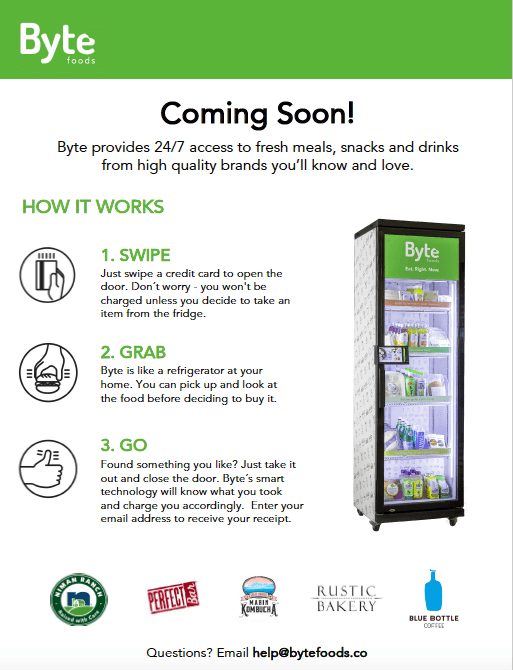
You will want to promote the “Grand Opening” of your store in the new location prior to it arriving. With it being a new technology and concept, you’ll want your potential customers to familiarize themselves with the fridge so they are excited to swipe that first time.
Here’s an example flyer we send to every new client to promote and distribute:
Step 3) 1st Week Check-in
Here is your opportunity to ask the client for positive and negative feedback for you to correct. This allows you to get ahead of any usage questions, troubleshooting, and getting ahead of any deal breakers later down the road. We recommend setting this up prior to the delivery to ensure buy-in from the client.
Location Client Relationship Building
You’ll want to maintain a good rapport with your client and check-in roughly every 30 days. This allows you to pull usage reports and increase revenue at any particular store unit. When this is done successfully, we have seen success with upselling opportunities or local referrals to other organizations. You can then leverage that location to generate even more revenue.
The post 2. Delivering a Byte Store to your location appeared first on Byte Technology.
]]>The post 3. Send a monthly infographic to demonstrate impact appeared first on Byte Technology.
]]>- Offering a perk that can be used by many of their employees
- Encourage and support healthier eating choices
- Boost productivity
- Support a local business or local producers
Monthly Infographic
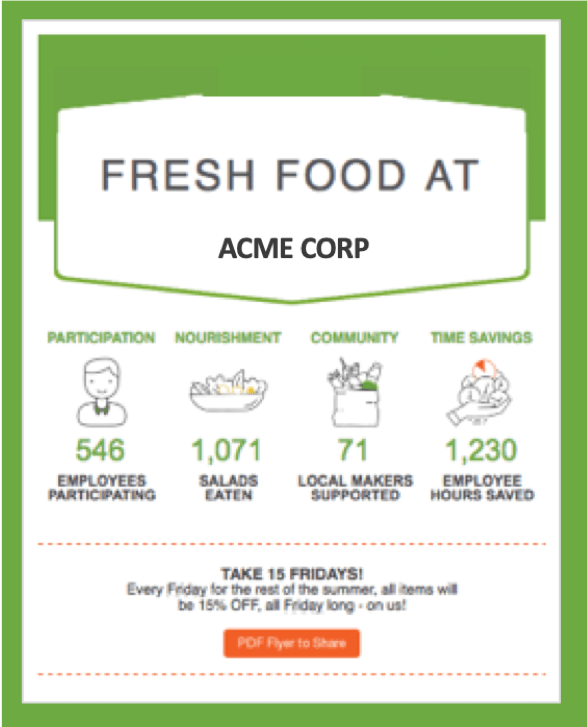
For workplaces, in particular, sharing data each month is a great way to justify a monthly service fee – if you charge one. Below is an example of how an infographic could be formatted:
How to pull the data
To pull the data as shown in the infographic above, you’ll need to do a basic transaction export. Calculate each field as follows:
Employees Participating: this is the unique number of UIDs transacting in a given month; a UID is a unique identifier per credit card. While this is not a perfect identifier for a unique user, it is a very close approximation. Another option is to look at unique first and last name combinations.
Salads Eaten: this is the quantity of salads sold in a given month
Local Makers Supported: if you produce or source from any local makers, this is the quantity of makers from whom products were purchased
Employee Hours Saved: arguably the most important metric of the bunch, you can calculate the total employee hours saved by multiplying the unique number of transactions by 15 minutes, then dividing by 60 minutes to convert to hours.
Sending the infographic
You can use a basic mail merge tool, use a more advanced email marketing tool like HubSpot or Mailchimp, or simply send clients a PDF. Whatever your delivery method, the most important piece is sharing regular data with your clients.
The post 3. Send a monthly infographic to demonstrate impact appeared first on Byte Technology.
]]>The post 4. How to create a usage report appeared first on Byte Technology.
]]>A usage report can be helpful to include when invoicing a client for a sponsored subsidy, or to provide to clients wanting a bit of detail on what employees are purchasing.
Step 1: Export the data
First, export the data for the given store(s) from the Byte Dashboard. This will export all transactions for the time period in which you’re interested. Be sure to only select data columns that you wish to share with the client
Step 2: Make client facing
Since you’ll be sharing this with you client, the following little touches will make the document look polished:
- Freeze the header row and bold the headers
- Be sure any unnecessary data columns are deleted
- Add your logo to a header row
Step 3: Add any “extras”
Is your client really interested in what the top sellers are? Include a pivot table highlighting what products are selling at the highest quantities.
Does your client have employees on-site 24/7? Include a breakdown of how your store is getting used at all hours of the day.
Do you want to drive home the high number of people using the store? Look at the unique number of UIDs to get a sense of the total users in the time period. Note that UID is an imperfect look at unique users, as a UID is created for each unique credit card. But it is a very close approximation.
That’s it! Now you’ve got a great way to access and communicate data to your clients.
The post 4. How to create a usage report appeared first on Byte Technology.
]]>The post 5. Maximize profits using subsidies and subscriptions appeared first on Byte Technology.
]]>Option 1 is they can do nothing (no food), or
Option 2 is to 100% subsidize the food and give it away.
The latter is very expensive, so you’re now able to offer a third option.
Sponsored Subsidies
Many clients choose to subsidize the cost of food in their fridge by a percentage. This allows them to decrease the cost of food to their employees and pay for that difference at the end of the month – based on what employees purchase. Companies can subsidize between 1% and 100%. They can choose to have a permanent subsidy, or to make it time or day based. Read more about discounts and subsidies here.
Subsidies are a win-win for you and the client. The lower prices result in higher sales volume for the location while making the food more affordable for employees – ultimately making them more productive, happier, and healthier.
Monthly Subscription
Many locations may be too small to ever sell enough food to be worth your while, but that’s where collecting a monthly subscription makes sense. In our experience, a number of smaller businesses are willing to pay a monthly subscription to simply have fresh food available and on-site for employees. Human Resources departments at companies of varying sizes allocate resources towards employee programs that increase retention and productivity, and they are always looking for new ideas on how to keep their employees happy. Employees themselves view easy access to delicious, fresh food as a perk, so we encourage clients to position their service as a solution worth paying for!
The post 5. Maximize profits using subsidies and subscriptions appeared first on Byte Technology.
]]>The post 1. Introduction appeared first on Byte Technology.
]]>Byte Technology stores are built from the ground up to extend the reach of retail into workplaces, hospitals, airports, apartment complexes and other public areas. A fundamental part of deploying Byte Technology-powered stores is learning how to identify a location and sell into the correct decision maker to create a win-win scenario for both parties. Based on years of experience, we’re now experts in pitching this fresh service to offices and want to pass that knowledge along to you.
The post 1. Introduction appeared first on Byte Technology.
]]>The post 2. The ideal client profile appeared first on Byte Technology.
]]>Variables that contribute to success
All of the following location-specific characteristics can contribute to the overall margin performance of a location:
- Number of people with access to the store
- Proximity of other food options
- Subsidy sponsored by the location
- Days of the week the location is open (ex: a workplace is typically open 5 days per week whereas a hospital benefits from sales 7 days a week)
- Available delivery windows (ex: ability to deliver at night or very early morning versus in a defined time window)
- Charging a subscription for the service you’re providing
The most important variable is sales volume, which means you need to be intentional with where you place yours stores. Here are a few minimum recommendations we’ve found helpful in determining what locations will be successful:
- Location types:
- Workplaces
- Hospitals
- Universities or community colleges
- Large apartment buildings
- Number of employees:
- Suburban workplaces with less food options: require 100+ employees with no subsidy or 30+ employees with a subsidy of 40%+
- Urban locations with more food options in close proximity: 200+ employees
- Poor alternatives: Avoid working with locations where other food options are free or subsidized, and your food will not be.
Roles target in your sales efforts
Once you have your list of locations you wish to target, who should you reach out to? Depending on the company size and type, there are a few titles you’ll want to look for:
- Facilities
- Office administrator
- HR (wellness or benefits manager)
- Executive or C-Suite
Here is a phone pitch and sales deck that may help in these conversations.
The post 2. The ideal client profile appeared first on Byte Technology.
]]>The post 3. Sales prospecting: identifying sales leads appeared first on Byte Technology.
]]>Prospecting boils down to two things:
- Numbers
- Time
Your goal is to reach as many prospects in as little time as possible. The best way to save time and maximize your numbers is by building a predictable and scalable process to reach your goals. This starts with first identifying sales leads, then creating the right content to send them.
How to identify sales leads
Most businesses around you are sales prospects looking for fresh food for their employees. Here are some tactics we’ve found helpful in identifying the contact information of potential sales leads:
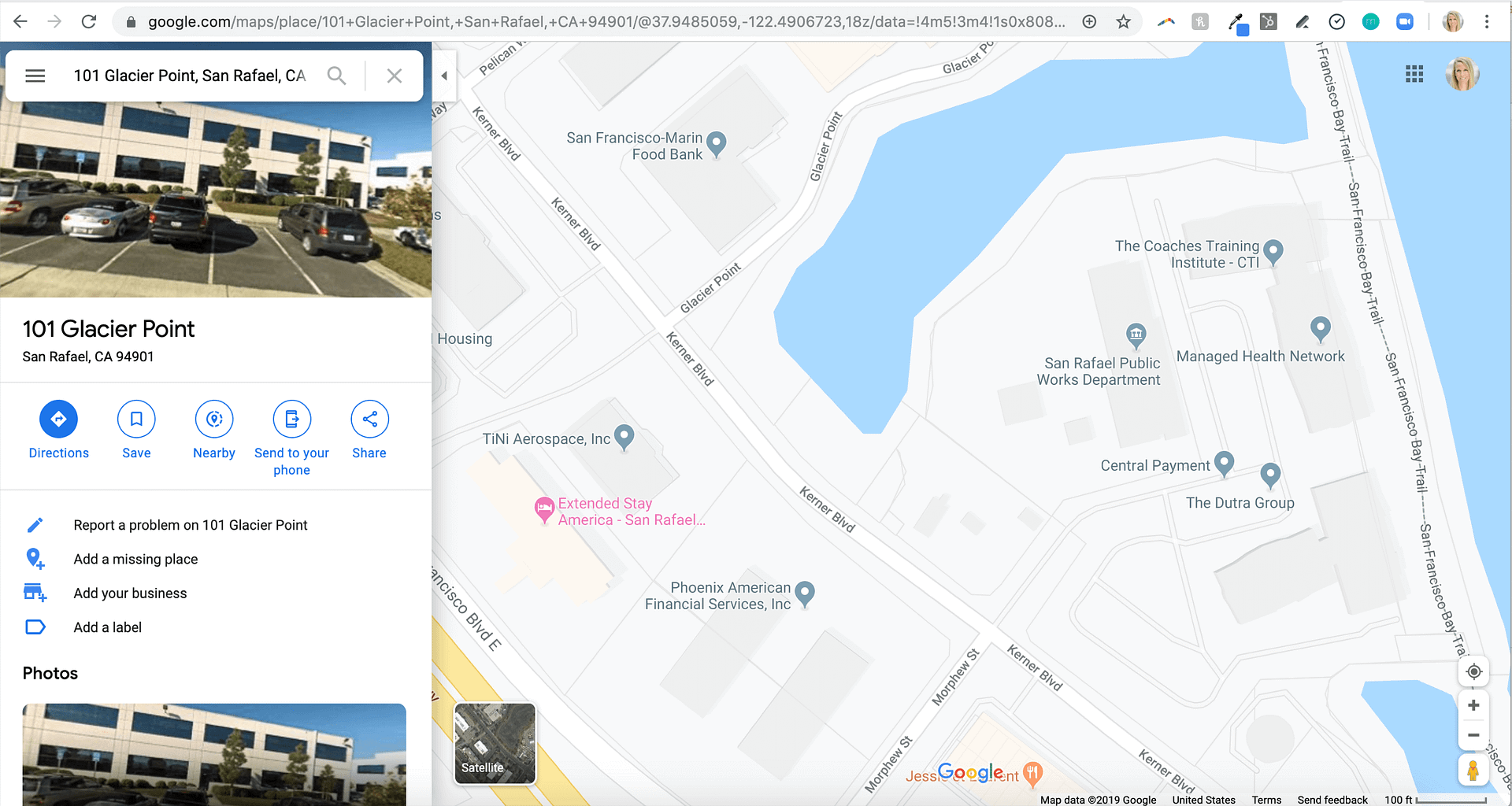
- Look at Google Maps and zoom in on large buildings in your specific geography; oftentimes these buildings are labeled with the company name and phone number of who is currently residing in them.
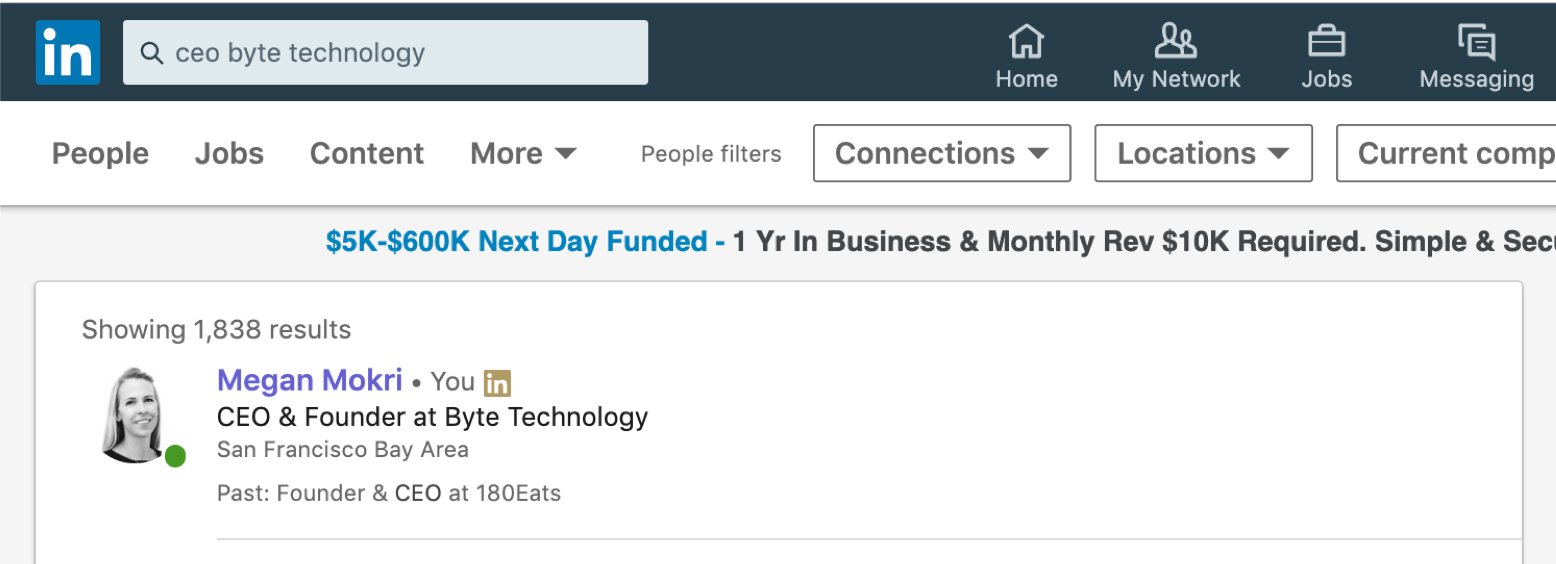
- Once you identify the company, search LinkedIn for the appropriate job title at each company; you may want to leverage a LinkedIn Premium account.
- Shortcut: Purchase leads directly from services like ZoomInfo or Data.com
- Leverage free resources for downloading lead lists directly (Reference USA and Hunter.io) or email automation resources (Rebump and CloudHQ).
Once you identify a lead and create a list of targets, it’s important to create an outreach process that allows you to ‘touch’ each lead multiple times through email, phone and text. We cover this here.
The post 3. Sales prospecting: identifying sales leads appeared first on Byte Technology.
]]>The post 4. Marketing one pager template appeared first on Byte Technology.
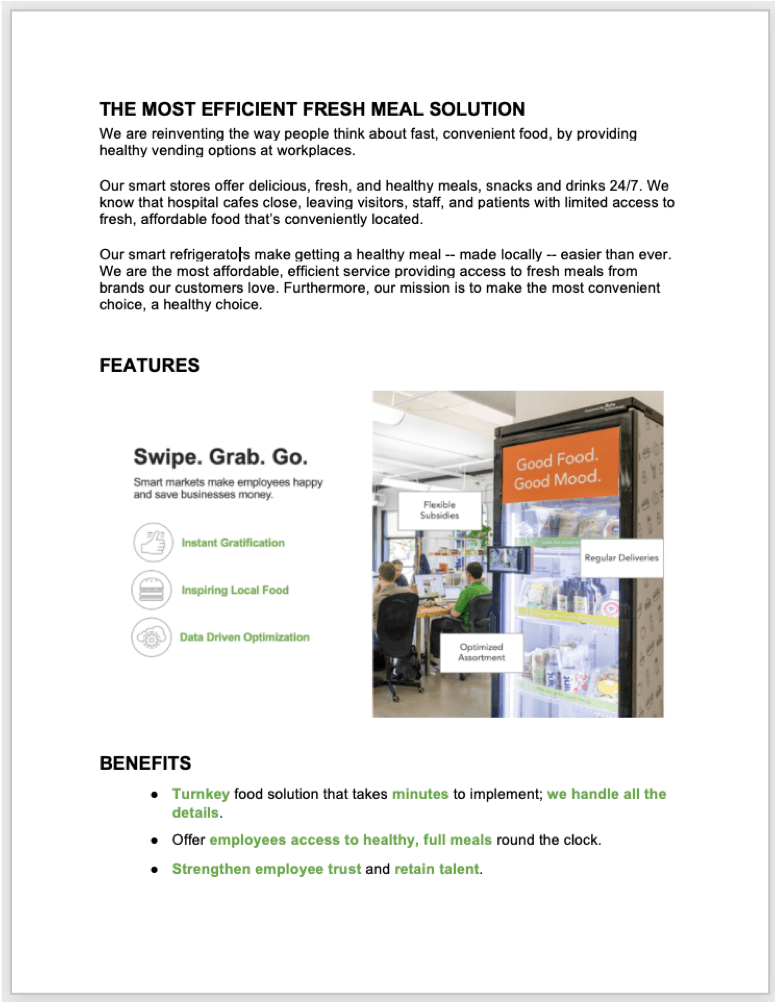
]]>
The post 4. Marketing one pager template appeared first on Byte Technology.
]]>The post 5. Sales prospecting: email sequences appeared first on Byte Technology.
]]>Email #1:
Hi {{Contact: Name}},
Have you ever considered bringing fresh food into your office, but assumed there wasn’t room in the budget? Then {{Company Name}} is right for you.
{{Company Name}} works with businesses like yours to offer fresh, healthy meals for employees to buy. We deliver a glass front fridge to your office, your employees swipe their credit card to purchase food. It’s like having a 24/7 mini (2ft X 2ft) Whole Foods in your office.
If you’ve ever considered bringing fresh food to your office, but don’t have the budget – then {{Prospect Name}} new solution makes sense.
Would you have 15 minutes for a call this week?
Thank you,
Email #2
2 Days Later
Hi {{First Name}},
Isn’t it time to get fresh food in your office? We stock a fresh food fridge in your office with healthy meals, snacks, drinks and treats for your employees to purchase. That’s right. ({{Prospect: Name}} doesn’t pay for the food.
We’re working with other local businesses in {{Location Name}} and employees love the food we offer (see below).
The technology in the fridge knows exactly what was removed, and charges the person correctly (think: Amazon Go).
Do you have 10 minutes to discuss? If there’s a more appropriate contact, would you mind introducing me to the person?
Thanks,
Email #3
3 Days Later
{{First Name}}, would you be interested in getting fresh food in your office?
Don’t worry:{{Prospect: Name}} isn’t paying for the food and having to give it away.
{{Prospect: Name}} isn’t paying for the food and having to give it away.
In 10 minutes we’ll install our fridge, then your employees can immediately start buying fresh food in the office.
We have a number of fridges in {{City Name}} and 90% of our customers say {{Company Name}} allows them to make healthier eating choices at work.
I’ll follow up with you tomorrow by phone.
Thanks,
Email #4
3 Days Later
{{Contact: First Name,}}
May I speak with you or someone in your office about bringing great food to your team?
We’ve got something for everyone {Product photo} and would love to set up a time to discuss.
Would next week be better for a quick call about {{Company Name}} in your office?
I’ll check back with you by phone tomorrow to see how things are going.
Thanks,
Email #5
6 Days Later
Hi {{First Name}},
Seems like you’re not interested in getting fresh, healthy meals delivered each day to your office. No worries. If you ever change your mind, you know where to find me.
Here’s a link to our website {{hyperlink}} to give you a better idea of what we offer, just in case anything changes on your end.
Please let me know if there is a better time to reach you or if there is another contact at {{Prospect Name}} I should be getting in touch with.
Thanks,
The post 5. Sales prospecting: email sequences appeared first on Byte Technology.
]]>The post 6. Overcoming objections appeared first on Byte Technology.
]]>When you reinforce that employees are purchasing the food they eat, the sales process often goes a lot smoother.
Common objections and how to respond
Objection: Our company doesn’t have a budget for fresh food.
Rebuttal: One of the benefits of the technology is the ability to pass the cost of the food along to the employee. The employees purchase the food directly from the fridge, so the employer doesn’t incur that cost and employees have fresh food at their fingertips.
Objection: We encourage our employees to leave the office during lunch.
Rebuttal: Rather than having to rush to a nearby cafe to stand in line and have to rush back to the office, your team is able to eat in the office, outside in the sunshine, or spend that extra time walking outside or using it how they’d like – rather than dealing with the anxiety of waiting for food from a restaurant or delivery.
Objection: What if it’s not stocked often enough or with the right products?
Rebuttal: Our interests are aligned. We will stock the fridge regularly and with the right products because we want to sell as much food through the fridge as possible. Clients want to sell as much food through the fridge as possible because that means their team is being productive in the office.
The post 6. Overcoming objections appeared first on Byte Technology.
]]>